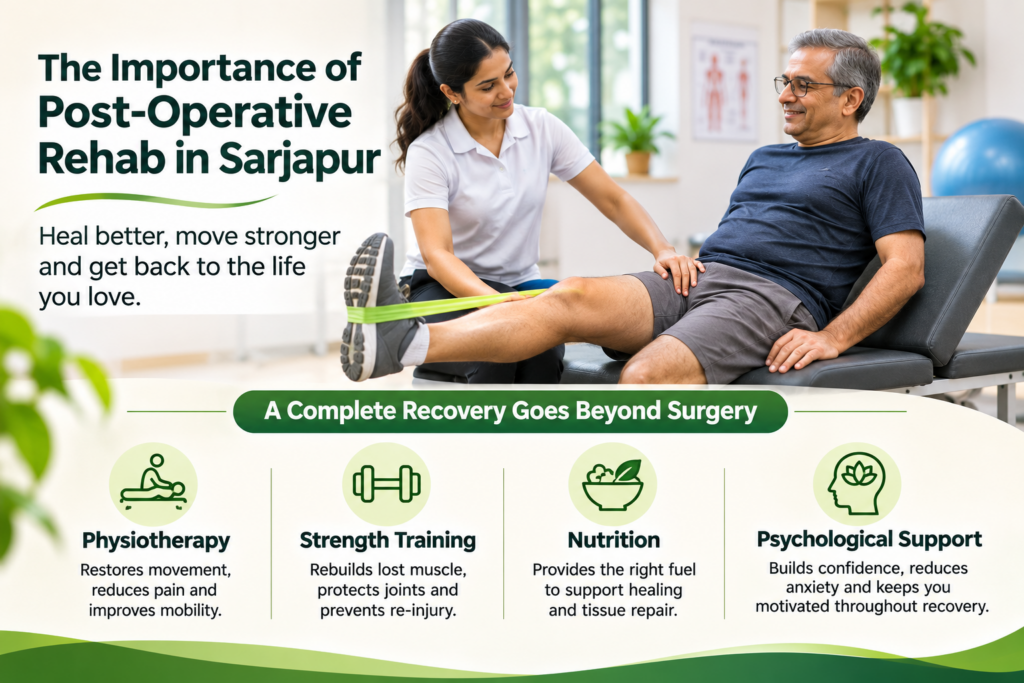
Surgery repairs the damaged structure, whether that’s a worn-out joint, a torn ligament or a broken bone. Rehabilitation is what restores the strength, movement and confidence you need to use it again. For anyone recovering from an operation, post-operative rehab in Sarjapur can be the difference between simply healing and fully getting your life back.
Many people assume the hard part is over once they leave the operating theatre. In reality, the weeks that follow bring their own challenges: stiffness, swelling, weak muscles, and a natural hesitation to put weight on the area that was operated on. Without guidance, it’s easy to move too little, too much, or in ways that slow healing.
In this blog, we explain why rehab matters after surgery, what the recovery journey looks like, and how to choose the right support.
Why Surgery Is Only Half the Recovery
Orthopaedic surgeons often say that rehabilitation is just as important as the surgery itself. Even a technically perfect ACL reconstruction can be undone by rehab that is rushed, skipped or poorly planned.
The numbers support this. Research on joint replacement suggests that as many as one in three people don’t get a good outcome, particularly after knee replacement. In one study of ACL patients, people who completed their full rehabilitation programme were far more likely to pass return-to-sport testing than those who stopped partway.
Surgery creates the opportunity for recovery. Structured rehab is what turns that opportunity into results.
When Should Post-Operative Physiotherapy in Sarjapur Begin?
In most cases, post-operative physiotherapy in Sarjapur should begin within days of surgery, following the protocol your surgeon recommends. Early rehabilitation after joint replacement is considered both safe and effective, and research on hip fracture patients has linked earlier, more frequent rehab with better recovery in everyday activities.
Waiting too long has real costs. Joints stiffen, scar tissue builds up, and muscles weaken quickly when they aren’t used. The early stage focuses on gentle movement, managing pain and swelling, and getting you walking safely again, so you can progress steadily from there.
What Effective Post-Operative Rehab in Sarjapur Includes
Good recovery involves more than a few exercises on a printed sheet. The most effective post-operative rehab in Sarjapur looks at the body and the mind together, across four key areas.
Physiotherapy to Restore Movement
Physiotherapy forms the foundation. It reduces pain and swelling, restores range of motion, and retrains basic movements such as walking, climbing stairs and getting in and out of a chair. Your physiotherapist adjusts the plan as you heal, so each stage builds safely on the last.
Strength Training to Rebuild Muscle
Muscle loss after surgery happens faster than most people expect. In older adults, thigh muscle volume has been shown to drop by around 14% within just two weeks of knee replacement. Progressive strength training rebuilds that lost muscle, protects the joint, and lowers the risk of falls or re-injury. The best programmes move you forward based on what you can actually do, not just on how many weeks have passed.
Nutrition to Support Healing
Your body needs the right fuel to repair tissue and rebuild muscle. Research suggests that adequate protein intake after orthopaedic surgery can help limit muscle loss and support recovery. This doesn’t require an unfamiliar diet. Balanced, familiar Indian meals with good protein sources, planned around your needs, can make a meaningful difference.
Psychological Support for Confidence
Recovery is as much mental as it is physical. Fear of re-injury, frustration with slow progress and anxiety about returning to work or sport are all common. Many return-to-sport assessments now measure psychological readiness alongside physical strength. Support for your mindset helps you stay consistent and move with confidence rather than hesitation.
Common Surgeries That Benefit from Structured Rehab
Almost any orthopaedic or musculoskeletal surgery recovers better with guided rehabilitation, including:
- Knee and hip replacement
- ACL and other ligament reconstructions
- Fracture fixation with plates, screws or rods
- Spine surgery
- Shoulder surgery, including rotator cuff repair
- Sports-related surgeries such as meniscus or ankle repair
Each surgery has its own protocol and milestones, which is why rehab should be tailored to your procedure, your age and your goals.
Choosing the Right Rehabilitation Centre in Sarjapur
When looking for a rehabilitation centre in Sarjapur, check that the physiotherapists are qualified and experienced with post-surgical cases. A good centre should coordinate with your surgeon’s instructions, offer focused one-to-one sessions, and track your progress with regular assessments rather than guesswork.
It also helps to choose a team that looks beyond the injured area. Ispan, for example, brings physiotherapy, strength and conditioning, nutrition and psychology together under one roof. That combined approach reflects what full recovery actually needs.
Conclusion
Surgery is an important first step, but it’s rarely the whole story. Post-operative rehab in Sarjapur helps you regain movement, rebuild lost strength, eat well enough to heal, and recover the confidence to move freely again. Starting early and staying consistent are what turn a successful operation into a successful recovery.
The effort you put into rehab in the weeks and months after surgery often decides how much of your old life you get back. With the right guidance and a little patience, that life can include walking, working, playing and moving without fear.